


Why Denim Tears Is Trending Denim Tears Brand
Inside the Cotton Wreath Motif: Its Meaning, History and Design
Hold a pair of Denim Tears jeans at arm’s length and the surface reads as a repeating ring of white blossoms scattered over indigo. Come closer and the shape sharpens: cotton bolls, opened, arranged into a circle. A label founded in 2019 by Tremaine Emory became one of the most discussed American clothing projects of its decade largely because of this small graphic and the weight it carries. Most brand motifs are identity marks and mean nothing beyond the company that owns them. This one is a citation, and knowing what it refers to changes how the garment reads on a rail, in a mirror and on the street. Below are the imagery, the history behind it, and the design choices that allow a single repeated shape to carry that weight.
Looking at the Motif Closely
The motif is a wreath built out of cotton bolls, the seed pods which open at maturity to reveal the white fibre within. The wreath is a circular form with a long history in Western visual language, used for victory, celebration, mourning and remembrance alike. Putting cotton inside that circle sets two ideas against each other at once: an agricultural commodity on one side, a form associated with honour and memorial on the other. Rather than a single logo placement, most garments carry it as an allover repeat at roughly two to four inches per motif. That repeat is not incidental, because the pattern reads first as decoration and only afterwards denim tear shorts as subject, and the delay between those two readings is part of its effect. Soft botanical outlines are what you actually see, which places it nearer a textile print than a protest graphic, and nothing about the drawing is aggressive.
The History the Motif References
The reference is the history of cotton in the Americas, and through it, the transatlantic slave trade and African-American experience. None of this is an interpretation applied after the fact by onlookers; it is the declared foundation of Denim Tears and the reason there is a motif at all. The 2019 founding of Denim Tears came four hundred years after 1619, the year that the first documented group of enslaved Africans was brought to the English colony of Virginia. The anniversary framed the brand’s arrival and gave the cotton imagery a specific historical anchor rather than a vague gesture. Two stretches of history matter most for reading the motif accurately, and both are well documented in the historical record. Below, the essentials are set out plainly, stated plainly rather than dramatised.
Cotton as the Engine of an Economy
Cotton was never a marginal crop in the American economy; for decades it was the centre of it. Around the middle of the nineteenth century, raw cotton accounted for roughly half of the total value of United States exports, feeding textile mills in the American North and in Britain. Enslaved labour in the South produced that output, and the number of enslaved people recorded in the 1860 census was a little under four million. Carried out by hand across long seasons, the work was brutal and repetitive, with harvesting quotas enforced by violence. Rather than a neutral botanical detail, the white fibre in the wreath is the physical product of that system. Without that scale in mind, the motif reads as a floral print; with it, the reading changes entirely.
Beyond 1865: The Crop That Did Not Let Go
The relationship between Black families and cotton land outlasted emancipation, which came in 1865 and ended legal slavery. Many freed people and their descendants remained working the same land under sharecropping and tenant farming, bound by debt structures that were extremely difficult to escape. Those systems lasted across the South well into the twentieth century, shaping housing, education and mobility across generations. Over the period from roughly 1916 to 1970, an estimated six million Black Americans left the South in the movement now known as the Great Migration, and reshaped cities across the North and West. The cotton wreath sits across that longer arc, not merely on the period before 1865. Read that way, the motif concerns continuity and inheritance as much as a single historical crime.
The Design Mechanics: Scale, Ground and Colour
Restraint is a large part of why this motif works, because political design usually fails when it shouts. The wreath is rendered in a limited palette, usually white or ecru on indigo, black or natural cotton ground, which maintains high contrast and adds no decorative noise. Running it allover rather than as a single chest hit removes any focal point and makes the viewer scan the garment. The scale is set so the motif reads at conversational distance of a few feet but reads only as texture from across a room. The print beds into the weave a little and softens as it ages on heavier cloth, whether fleece around 380 to 480 gsm or denim around 12 to 14.5 oz. That softening is deliberate rather than a flaw, and it lets the graphic age alongside the garment instead of staying artificially crisp.
How the Motif Reads Across the Range
What the wreath is printed on changes how it behaves, and it is one of the more interesting aspects of the catalogue. Emphasis shifts with surface area, drape and the cultural associations of the garment type. On jeans the reference to raw material is most direct of all; a hoodie renders the motif softer and more casual in tone. Below, the table pairs that variation with broad 2026 market estimates, given as ranges rather than fixed prices and moving with release, condition and size. Resale pricing for graphic-led streetwear moves constantly, so none of these figures should be treated as a quotation. The last column records what each application emphasises most.
| Garment | How the motif is applied | 2026 market estimate range | What comes to the fore |
|---|---|---|---|
| Five-pocket jeans | A repeat covering both legs | $300–500 | Cotton on cotton, the most direct reading |
| Hoodie | Chest hit or allover repeat | $250–400 | Legibility in daily wear, plus softness |
| Tee | One placement, front or back | $100–200 | A clear standalone statement |
| Sweatpants | Repeat down the leg | $250–350 | Pattern read as texture, not message |
| Cotton shorts | Reduced repeat, fewer motifs | $180–280 | Smaller surface area, greater restraint |
Why It Had to Be Denim
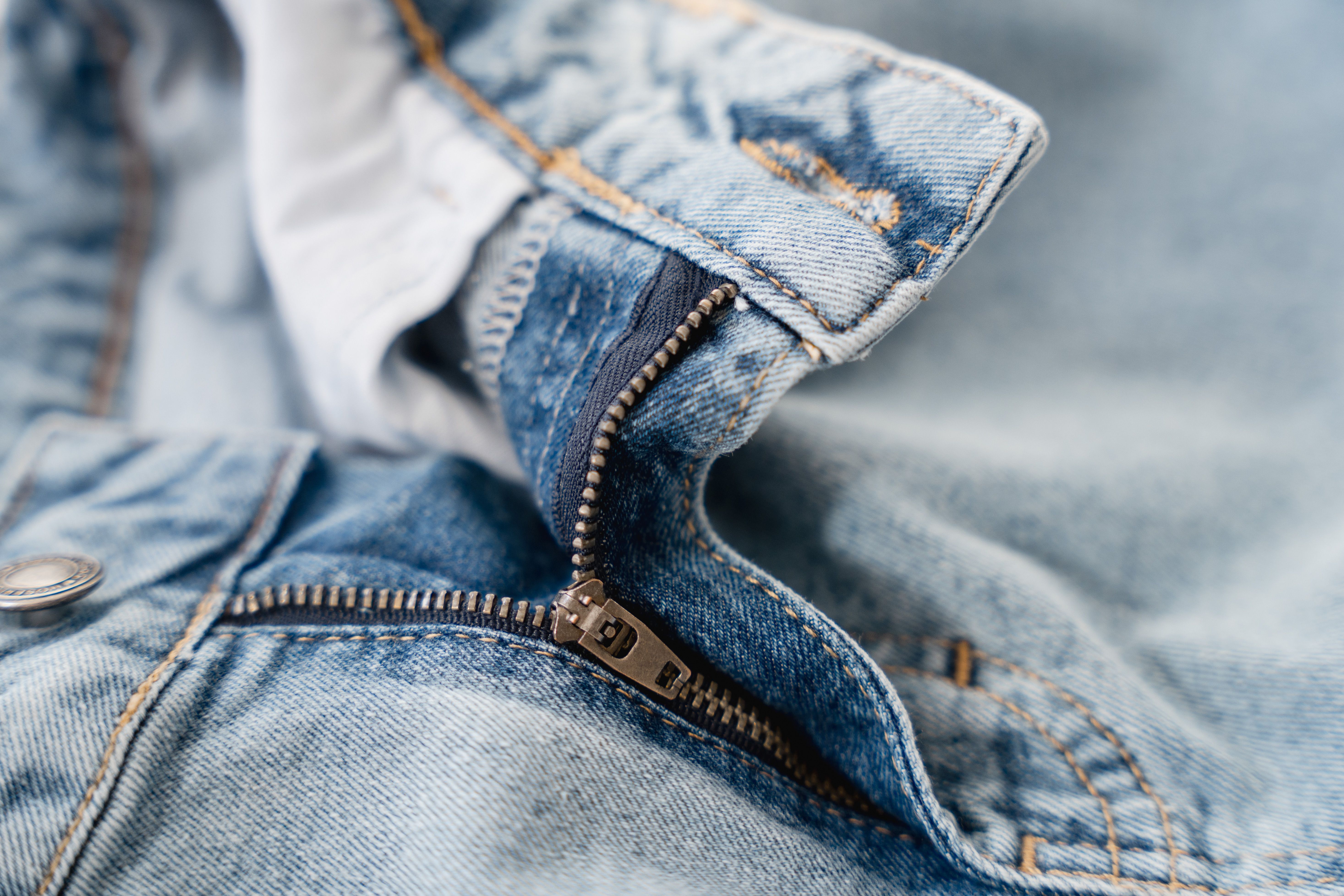
Nothing in the project is sharper than the decision to build the flagship product on Levi’s 501 jeans. The 501 begins with riveted work trousers patented for labourers in the 1870s, and it is now shorthand for American clothing worldwide. Since denim is cotton, dyed with indigo, a cotton wreath printed on it makes reference and material one and the same substance. A printed nylon jacket could never do this: the distance between message and object simply collapses. It also puts the graphic on a garment associated with work, which keeps the historical reference to labour in the frame. Meaning flows from that original pairing to everything else Denim Tears makes, including the hoodies and sweatpants that most people wear far more often.
Clearing Up the Misreadings: What the Motif Is Not
For anyone encountering the brand through resale listings, a handful of clarifications save a great deal of confusion. The wreath is not a decorative floral print that happens to look agricultural, and calling it that misses the entire point. It is also not a claim of ownership over history by any single designer; it operates as a reference to a shared, documented past. With no text and no explicit demand of the viewer, the motif is not a slogan. Secondhand accounts of the brand’s intent deserve caution, because much of the commentary in circulation paraphrases interviews loosely or attributes statements that were never made. It is better to describe what the imagery references than to assert what any individual said, particularly when you are unsure.
Seven Years On: Wearing It Thoughtfully
Seven years since the label launched, the motif is familiar enough that most people who see it in public have some sense of what it points to. Treated purely as a status marker, the graphic flattens into exactly the kind of empty logo it was designed not to be, which is the mild risk that familiarity brings. Nobody needs to avoid the clothing; the answer is knowing what it references before you wear it. A search for a Denim Tears hoodie or Denim Tears jeans in 2026 returns styling advice and almost no history, a gap worth closing for yourself. Heavy cotton, well made, and meant for hard and frequent wear: that is what they are underneath everything. Nothing about understanding the wreath makes the clothes precious; it simply means you are wearing something you can actually explain.

